This conference seeks to invite stakeholders to discuss the challenges and opportunities emerging from the new forms of translation collaboration, creation and communities enabled by digital infrastructures.
Translation is being rapidly reconfigured, as digital infrastructures, platform logics, and generative AI become embedded in everyday cross-cultural communication. Technologies no longer merely “assist” but also becomes translation itself; they increasingly (re)shape what translation is, who performs it, and how translated discourse circulates and gains value. As these changes accelerate, boundaries are shifting between human and machine agents, occupational and non-occupational participations, as well as practitioner, educator, and researcher. These boundary shifts disrupt occupational identities and labour markets, while also enabling new participatory cultures, new modalities of access, and new forms of collaboration. As such, they expose urgent ethical and epistemic problems: data bias and harm at scale, opaque decision-making, uneven access to tools and resources, and the marginalisation of minoritised languages and communities. Educationally, institutions face pressure to redesign curricula and assessments in ways that acknowledge AI-mediated workflows without reducing learning to tool use or policing coursework. Psychologically and socially, students and practitioners may experience anxiety around competence, legitimacy, surveillance, deskilling, and employability. Yet these tensions also create opportunities to rethink quality, accountability, and expertise; to develop critical AI literacy; and to build more inclusive, sustainable, and future-oriented frameworks for translation and cross-cultural communication across sectors.
These challenges and opportunities invite us to address critical questions such as: How should translation be re-conceptualised when workflows are fragmented across prompts, interfaces, datasets, and automated evaluation metrics? Where do agency, authorship, and responsibility lie when outputs are co-produced by humans and systems shaped by training data, product design, and platform governance? How are occupational boundaries being redrawn in relation to crowdsourcing, community translation, fandom, and other non-occupational practices, and what new standards of competence and legitimacy emerge? What pedagogies and assessments can cultivate ethical judgement, critical data awareness, and reflective practice? And what supports are needed to mitigate anxiety while preparing learners and practitioners for sustainable participation in AI-rich translation futures?
In order to advance dialogue and knowledge exchange among stakeholders addressing the above questions, this conference will feature keynote speeches, a round table, paper panels, and a poster exhibition.
We welcome submission of panel papers and posters that fall under, but are not restricted to, the following areas: 1) Agency in AI-embedded international communication 2) Transnational platformization 3) Globalized cultural heritage 4) Translator education 5) Language service career and industry 6) International communicators’ psychology 7) Transcultural or transnational communities 8) Multimedia translation
We feature the following keynotes (in alphabetical order): Dr. Guo, Ting (University of Liverpool, Liverpool) Dr. Neather, Robert (Hong Kong Baptist University, Hong Kong) Prof. Zhu, Chunshen (Chinese University of Hong Kong, Shenzhen)
Submission Submissions are welcome from all walks of life or stakeholders, including but are not limited to researchers, educators, practitioners, entrepreneurs, volunteers, users, and regulators.
Panel paper abstracts should be submitted in a Word file containing a presentation title, (an) author/presenter name(s), (an) affiliation(s), an abstract, and (a) bio-note(s). Both in English, the abstract should be no more than 300 words, and the bio-note should be no more than 100 words.
Posters should be submitted in a PDF file containing a presentation title, an author/presenter name, (an) affiliation(s), an abstract, a bio-note, and the content of the poster. There is no word limit for posters, but each poster should be one page only. The poster can be in English or in English-and-Chinese.
Both panel paper abstracts and posters must be submitted as an email attachment to [HSS.Conference@xjtlu.edu.cn]. The submission email should clearly indicate to which of above area(s) the presentation aims to contribute.
Conference format There may be parallel panels, depending on the number of accepted submissions. Non-parallel panels will be separated through coffee/tea breaks in each morning and afternoon where refreshments will be provided. The conference also includes two lunch buffets.
Each panellist will have 20 min for their presentation, which is followed by a Q&A of no more than 10 min. Posters will be exhibited in a designated area within the conference venue throughout the conference, and conference delegates will be directed to the exhibition at a designated presentation period, when presenters can answer questions.
While English is compulsory for all submissions for peer-review purposes, speakers are welcome to present their ideas in English and/or Chinese and are encouraged to demonstrate their own intercultural competence when addressing the issues arising from choosing one language.
Fees The conference requires registration fees, which are differentiated for non-student participants and student participants. Non-student registration fee: 800 RMB Student registration fee: 400 RMB Non-presenting participation fee: 400 RMB
Key deadlines 1 April 2026 |10 April 2026: Deadline for submission. 1 May 2026: Announcement of accepted presentations. 5 May 2026: Registration opens. 20 May 2026: Registration closes. 25 May 2026: Announcement of conference programme. 6-7 June 2026: The conference.
Communication All communications, including announcements of accepted presentations and the conference programme, will be made through the conference email [HSS.Conference@xjtlu.edu.cn]. Any enquiries should also be directed to the organising committee through the conference email.
Organising Committee Dr. Boyi Huang Dr. Hui Wang Dr. Xiaojun Zhang
Scientific Committee Dr. Alan McCluskey Dr. Jonathan Ford Dr. Peter Yacavone Ms. Siyu Chen Dr. Songyan Du Dr. Thomas Duggett Dr. Wan Hu Dr. Yangyang Long Dr. Zhiwei Han
Operation Team Ms. Nelly Mao Ms. Jiao Hui Ms. Yuxin Deng
Conference information
Date/Time
Starts
Ends
All times are in Asia/ShanghaiAsia/Shanghai
Location
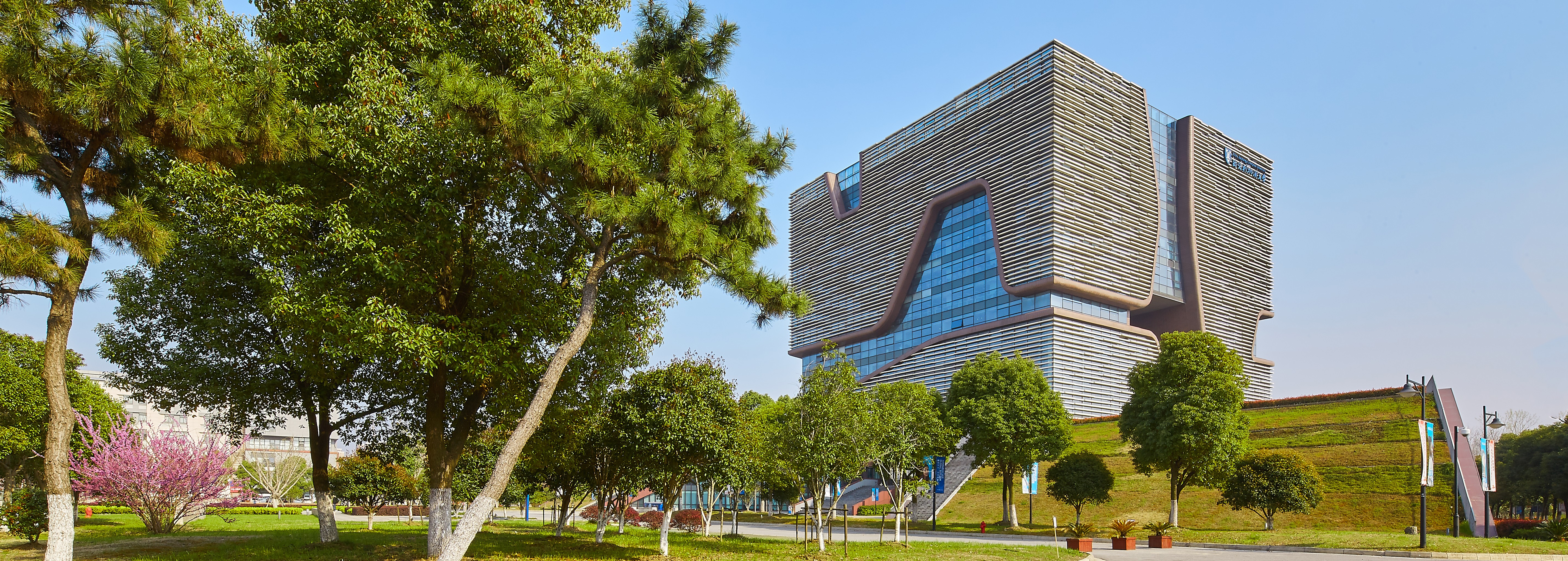
IA Building (International Academic Exchange and Collaboration Center), SIP Campus